Writing the description for your listing

Writing the description for your listing is an important step in putting your home on the market. But don’t worry, it’s not very complicated. After all, who knows more about your home and neighbourhood than you?
Your listing should say what the photos cannot convey. A complete and appealing description will have a greater chance of attracting potential buyers, and will prevent unnecessary calls and visits. Here are our tips for creating a great listing.
Organize the description
Carefully select the first words
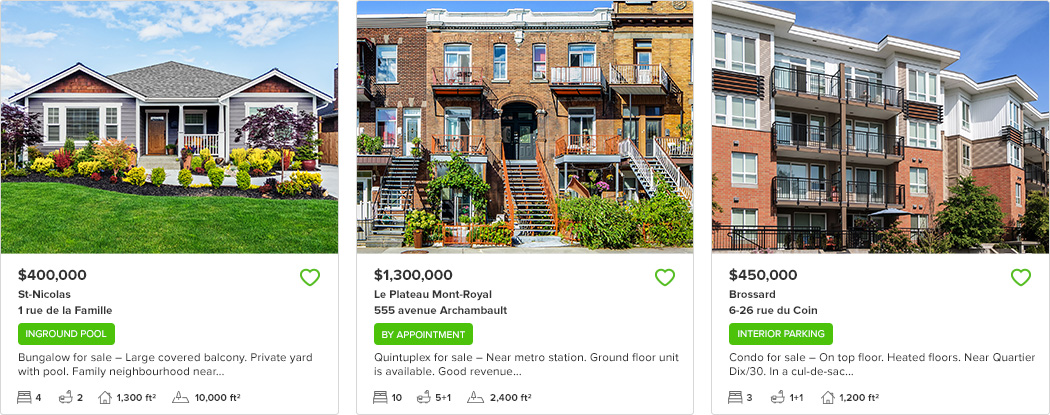
The first two or three lines should provide the facts in clear, concise language. Avoid qualifiers and use very informative keywords. Since the first 70 to 80 characters of the description, including the type of property, appear in the search results (see examples below), it is important to include as much important information as possible. Note that if the last word is too long, it will not be displayed, so as not to break up the word. The aim is to write the preview in a way that will entice buyers to click through to the listing.
The first few lines should complement the main photo. If there is an important feature that cannot be seen in this photo, it is even more important to mention it early in the introduction. Inversely, an attached garage does not need to be mentioned as early in the text if it can be seen in the photo that appears in the search results.
The full description
You can write the rest of the description like a guided tour of your property, by following the order of the photos, for example. The number of bedrooms or bathrooms and the important features in the main rooms (kitchen island, powder room, laundry room, storage room, etc.) should be mentioned. It is not necessary to list everything that appears in the photos, like the moulding, flooring, etc. The important thing is to situate the rooms on the different storeys and to give potential buyers a clear understanding of your product.
Inclusions and exclusions
To help buyers know what they will be getting in the sale, it is a good idea to mention certain inclusions or exclusions (if applicable) in the description.
| Inclusions |
|
Elements that are an integral part of the property (heating, electrical, lighting) are included by default, so there is no need to mention them in your listing. You can decide to include elements that are not permanently connected to the property. For example, it is recommended that you mention if you are including non-built-in household appliances, a wine cellar, a freestanding hot tub, garden accessories, furniture, etc. |
| Exclusions |
Exclusions are elements that are generally included, but will not be in this sale. It is not necessary to mention that your furniture and belongings are excluded. |
Optimize its impact
Showcase the advantages
The perfect message includes everything that makes your home a good purchase. Before starting the description, you could jot down the features that attracted you to the property. There is a good chance they will attract the new owners as well.
Keep it short and precisee
Unless you have exceptional writing skills and an original story to tell, it’s best to write simply. A long text or run-on paragraphs that go on for lines can discourage visitors from reading the listing. If you have a lot of items to list, it’s best to use bullet points or a numbered list.
Avoid vague terms
To really help the buyers looking for a property, it is best to avoid comments that could be interpreted in various ways by different people. For instance, “lots of extras” isn’t as specific as “washer, dryer and dishwasher included.” You’ll also avoid lots of pointless calls when you say “15 minutes from downtown” rather than “near the highway,” and when you specify “country-style décor” instead of just “tastefully decorated.”
Avoid abbreviations and words in all caps
Your goal is to write a description that’s easy to read and to understand. So, if you shorten words or expressions, make sure it doesn’t slow the reader down. To be sure, ask a few people to reread your listing. If they don’t get what “2 br in bsmt” means, then the odds are that buyers won’t either. In that case, it would be best to write out “two bedrooms in the basement.”
Contrary to what one might think, words in all caps will not be more likely to catch a buyer’s eye. In fact, they are perceived as yelling.
Be enticing but realistic
Short and simple doesn’t have to mean bland, so add a little personality to your listing. There’s nothing wrong with saying “beautiful bungalow” instead of “single-family home,” or “very popular neighbourhood” instead of “nice area.” It’s more appealing. But remember not to exaggerate. If you say your home is on an “estate,” be sure it’s true. Be interesting but realistic.
Examples of descriptions
Here are a few examples for inspiration:
 |
Single-family home : Dowload |
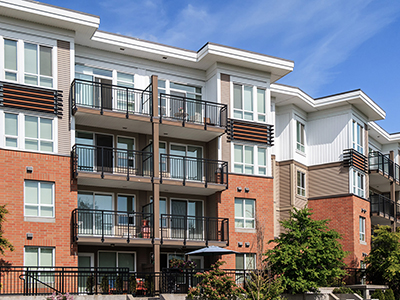 |
Condo : Download |
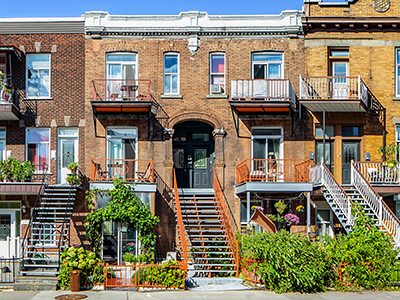 |
Multiplex : Download |
FAQ
What information should I include in my listing?
Before the sale, you are required to reveal your property’s exact condition to the buyer. We therefore suggest including all relevant information in your listing.
If you hold back information and only disclose it later, you risk disappointing the buyers. Being transparent will help you earn a buyer’s trust.
The more details you include in your listing, the less time you will waste communicating with people who would not be interested if they knew your property’s actual condition.
Is there a word limit?
No, you can write as much as you like. However, we suggest you concentrate on providing information and avoid overloading the text.
Is it important to mention renovations that were done?
Renovations that are visible in the photos will speak for themselves, so there is no need to provide extensive details. “Kitchen renovated in 2012” is sufficient if the photos show the entire kitchen.
For other, non-visible renovations, make sure the buyers will not see them in a negative light. While it might seem like a good idea to say the French drain has been replaced, the buyer could think that the home had a water infiltration problem. It is better to keep this information for the Declaration of the Seller form or to provide it to the buyer upon request.